Why Going Out Too Fast on a Benchmark WOD Costs More Than It Seems To
Quick Answer: Going out at a pace that feels sustainable in the first 2 minutes of a benchmark WOD often isn’t — anaerobic systems mask fatigue accumulation early on, and the true cost of an aggressive start shows up as a much larger slowdown in the back half than most athletes expect. A deliberately conservative first round, even if it feels too easy, usually produces a faster overall time.
The first round of a benchmark WOD almost always feels good — maybe even easy. That feeling is unreliable, and the athletes who trust it tend to post the worst splits in the back half of the workout.

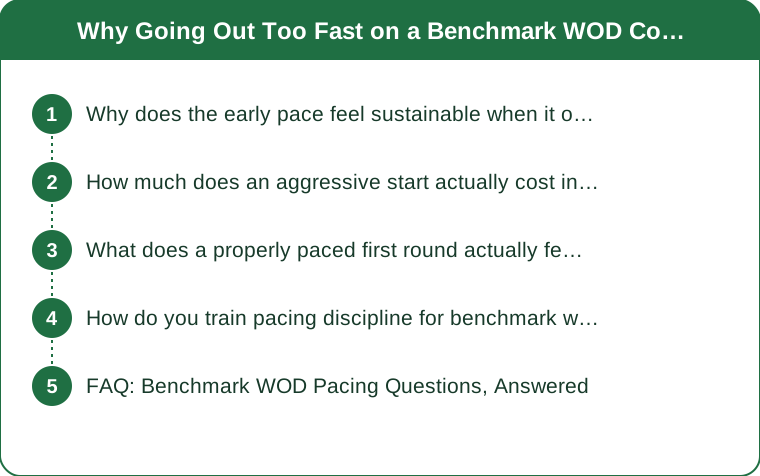
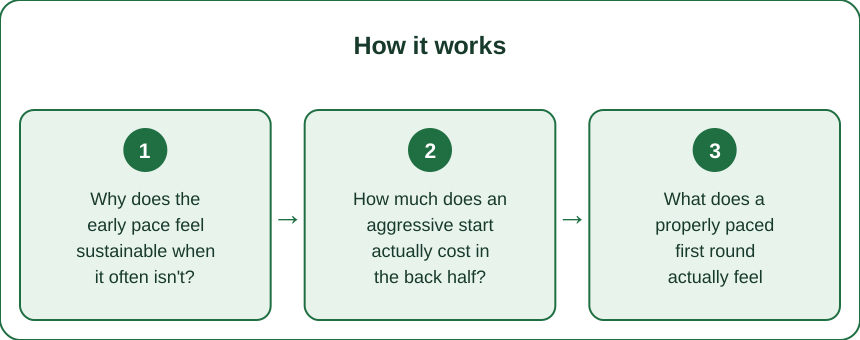
Why does the early pace feel sustainable when it often isn’t?
Anaerobic energy systems can sustain a hard pace for the first 1-3 minutes before the metabolic cost of that pace fully catches up, which is exactly why an unsustainable start feels fine at first. By the time the fatigue becomes obvious, the damage — accumulated lactate, depleted phosphocreatine stores — is already done, and slowing down at that point doesn’t fully recover the lost time.
How much does an aggressive start actually cost in the back half?
Athletes who go out 10-15% faster than their sustainable pace typically see a 20-30% pace drop-off in the second half, a net loss compared to a more even pacing strategy. This is a well-documented pattern across endurance and mixed-modal sports, not specific to any one workout.

What does a properly paced first round actually feel like?
Noticeably conservative — almost uncomfortably controlled compared to what your competitive instinct wants in round one. If the first round doesn’t feel at least a little too easy, you’re likely already pacing too aggressively for the workout’s actual duration.
How do you train pacing discipline for benchmark workouts?
Practice negative-split pacing on shorter test pieces — deliberately going out slower than feels natural and finishing faster, so the sensation becomes familiar under fatigue rather than something you’re guessing at for the first time during an actual benchmark attempt.
Knowing your target time in advance and checking the clock at consistent intervals (end of round 1, halfway point) helps catch an overly aggressive start before it’s too late to adjust.
FAQ: Benchmark WOD Pacing Questions, Answered
Does this pacing principle apply to all WOD formats equally?
It applies most clearly to longer benchmark workouts (15+ minutes); very short, high-intensity pieces (under 5 minutes) have less room for this kind of pacing strategy to matter as much.
How do I know my sustainable pace if I’ve never done the workout before?
Using a slightly conservative estimate based on similar past workouts, and checking the clock at the end of round one, is more reliable than guessing based on how the first movements feel.
Is it better to negative split or even split a benchmark WOD?
Both generally outperform a fast start followed by a big fade — a slight negative split (second half slightly faster) is often considered the ideal target for most benchmark formats.
TL;DR:
- Anaerobic systems mask true fatigue cost in the first 1-3 minutes, making an unsustainable pace feel fine early
- Going out 10-15% too fast often costs 20-30% pace in the back half — a net loss
- A properly paced first round should feel slightly too easy, not maximally hard
- Practice negative splits on shorter pieces to build pacing discipline before a real benchmark attempt
The workout is usually won or lost in the first two minutes — a controlled start beats an aggressive one almost every time.
Keep Reading
This article is for general informational and styling purposes only. Fit, sizing, and product availability may vary.