Why the First Lift in a Cold Garage Gym Feels So Much Heavier
Quick Answer: Cold muscle produces less force and contracts more slowly, joints have more viscous synovial fluid, and metal bars and plates strip heat out of your hands. A summer warm-up is not enough — double the general portion to 10-15 minutes, add more warm-up sets at smaller jumps, and accept that the first working set is a poor read on the day.
August: 60kg flies.
October: the same 60kg feels like a max.
You did not detrain in six weeks. Your garage dropped 12 degrees.

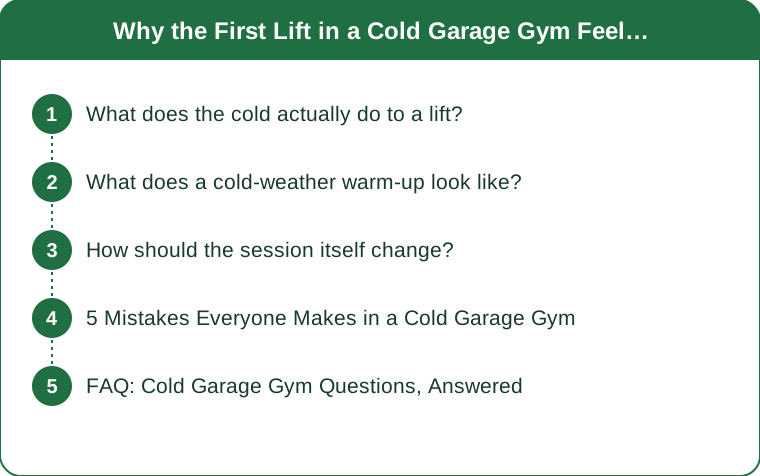
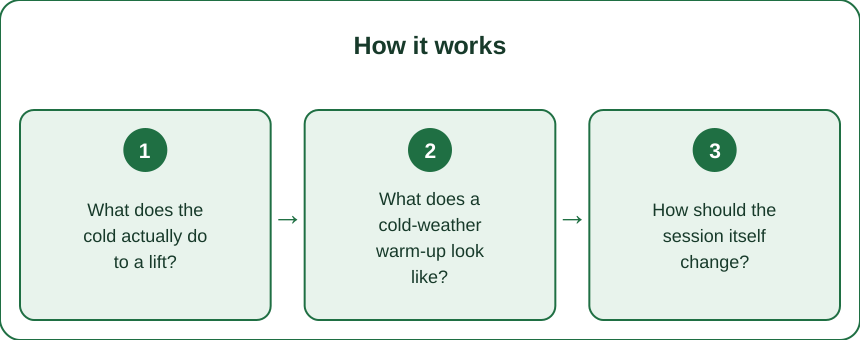
What does the cold actually do to a lift?
Five effects, and only one of them is in your head.
Muscle force production falls at lower tissue temperature. Contraction velocity drops, rate of force development drops, and power output — which depends on both — drops most of all. That matters more for a clean or a snatch than for a slow grind, which is why explosive lifts feel disproportionately awful on a cold morning.
Joints are stiffer. Synovial fluid is more viscous when cold, so available range of motion feels restricted. Hitting depth in a squat or an overhead position genuinely is harder before you are warm.
Grip suffers first. Hands are the first thing your body sacrifices to peripheral vasoconstriction, and a cold steel bar pulls heat out of your palms rapidly. Grip failure on a set you should own is a temperature problem far more often than a strength problem.
The equipment behaves differently. Bar knurling feels sharper on cold hands, bumper plates are slightly harder and bounce more unpredictably, and rubber flooring is firmer.
And injury risk rises on explosive work. Cold muscle is less compliant, and the higher-risk moments are the fast eccentric ones — catching a clean, a fast descent, box jump landings. This is the reason to lengthen the warm-up, not just the performance argument.
What does a cold-weather warm-up look like?
Roughly double the general portion, then be more patient with the specific work.
10-15 minutes of general work, not 5. Row, bike, skip — anything that raises whole-body temperature gradually. Aim for genuinely warm and lightly sweating before you touch a bar. In a cold garage that takes longer than it feels like it should.
Keep layers on for the warm-up and shed them late. Most people strip down at the start and spend the whole session fighting to get warm. Long sleeves and a hoodie through the general warm-up and the empty bar work, off once you are into working sets.
More warm-up sets, smaller jumps. Where you might do empty bar, 50%, 70%, 85% in summer, run empty bar, 40%, 55%, 70%, 85% in the cold. Extra sets cost two minutes and dramatically change how the first working set feels.
Add specific mobility for the positions the session needs. Overhead work needs thoracic extension and shoulder range; squats need ankles and hips. Cold joints need this more, not less.
And warm your hands deliberately. Rub them, keep them in pockets between sets, and consider warming the bar — even wiping it down with a warm cloth changes the first contact. Grip is the most temperature-sensitive part of the whole lift.

How should the session itself change?
Five adjustments that make a cold session productive rather than demoralising.
Do not treat the first working set as a benchmark. It is a data point about the temperature, not about you. Judge the day from set three onwards, once you are properly warm.
Extend rest periods slightly, but stay moving. Standing still in a cold garage for three minutes between sets means you cool back down and warm up again every set. Walk, swing your arms, keep a jacket on between sets — this is where a cold session is won or lost.
Consider shifting the emphasis. Cold days suit strength work at moderate intensity and steady conditioning better than they suit maximal explosive attempts. Save the heavy snatch session for a warmer day or a properly extended warm-up.
Scale the metcon expectation. Times will be slower. Breathing cold air raises perceived effort, and grip fatigues faster on cold metal. Compare like with like across seasons or you will conclude you are detraining when you are not.
And keep drinking. Thirst sensation is blunted in the cold while sweat losses under layers are real. Dehydration in a cold garage session is common and invisible, and it shows up as an inexplicably bad third round.
5 Mistakes Everyone Makes in a Cold Garage Gym
Using the summer warm-up. The single most common error, and the one that causes both the bad sessions and most of the tweaks. Double the general portion.
Stripping layers at the start. You then spend 40 minutes trying to reach the temperature you would have had in ten. Layer down, not up.
Jumping straight to a heavy attempt because you are short on time. Cold plus explosive plus heavy is the specific combination behind most garage-gym tweaks. If time is short, cut the working sets, not the warm-up.
Sitting still between sets. Three minutes stationary in a 10C garage undoes the warm-up you just did. Keep moving and keep a jacket to hand.
And panicking about the numbers. A 10-15% drop in what feels manageable on the first cold week is entirely normal and reverses as you warm up within the session and adapt across the weeks. Track your lifts across seasons before concluding anything about your training. This is general information, not medical advice — sharp joint pain, or pain that does not warm up and instead worsens through a session, is a stop sign rather than a cold-weather quirk.
FAQ: Cold Garage Gym Questions, Answered
How long should my warm-up be in a cold garage?
10-15 minutes of general work, plus more warm-up sets at smaller jumps than you use in summer.
Why does my grip fail before my legs?
Hands cool fastest and a cold steel bar strips heat from your palms. Warm your hands between sets and consider warming the bar.
Is lifting in the cold dangerous?
Not inherently, with an adequate warm-up. Risk concentrates in explosive and fast eccentric movements on cold tissue, which is exactly what a longer warm-up addresses.
Should I use a heater?
If you have one, running it for 20-30 minutes before the session is genuinely worth it. Never leave one unattended, and keep it clear of equipment.
Why are my metcon times worse?
Cold air raises perceived effort, grip fatigues faster and force production is lower. Compare seasons to seasons, not October to July.
Do I need to eat differently?
Not dramatically, though your body does use energy maintaining temperature. Keep drinking — that is the one people get wrong in the cold.
When will my numbers come back?
Most of it returns within the session once you are warm. Across the winter, a slightly longer warm-up becomes the new normal and the numbers follow.
TL;DR:
- Cold cuts force production, contraction speed and range of motion — the first lift is a temperature reading, not a fitness test.
- Double the general warm-up to 10-15 minutes and add warm-up sets at smaller jumps.
- Keep layers on until you are properly warm, and keep moving between sets rather than sitting in a cold garage.
- Grip fails first — warm your hands, and warm the bar if you can.
- Save maximal explosive work for warmer days, and compare your times season to season.
Add five minutes to the front of tomorrow’s session. It is the cheapest lift you will add all winter.
Keep Reading
This article is for general informational and styling purposes only. Fit, sizing, and product availability may vary.