Hook Grip: Why It Hurts, Why You Should Learn It Anyway, and How to Get Through the First Month
Quick Answer: Hook grip means wrapping your thumb around the bar first and trapping it under your index and middle fingers. It hurts initially because you are compressing the thumb between bar and fingers, and the pain fades over roughly two to four weeks as the tissue adapts. It is worth learning because it is far more secure than a normal grip for pulling movements and, unlike a mixed grip, it keeps both arms symmetrical — which matters for shoulder health over time.
Tape the thumbs, use it on warm-up sets first, and give it a month.

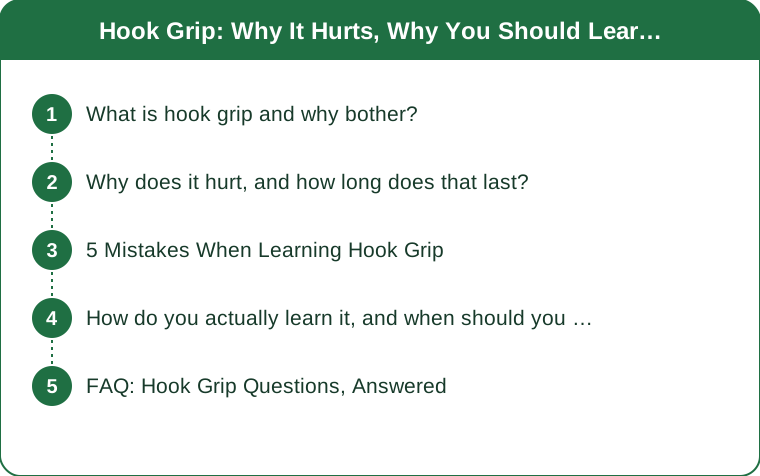
What is hook grip and why bother?
Your thumb becomes a locking mechanism rather than a passive finger.
In a normal grip, your fingers wrap the bar and your thumb wraps over the top of them. The bar is held by finger flexor strength alone, which is why grip is so often the limiting factor in heavy pulls and long sets.
In hook grip, the thumb goes around the bar first and the index and middle fingers close over the thumbnail. The bar is now held by a mechanical lock rather than by grip strength, and your fingers pull the thumb tighter as the load increases.
The result is a substantially more secure hold. It is the standard grip in Olympic weightlifting for exactly this reason — nobody snatches heavy without it.
Compared with a mixed grip, the key advantage is symmetry. A mixed grip works well and it puts one arm in supination and one in pronation, which loads the two shoulders and biceps differently and creates asymmetric rotation through the spine. The supinated arm is also the one at risk of a biceps tear on a heavy or fast pull.
Hook grip keeps both hands in the same position, which is why it is the preferred option for anyone doing high volume pulling over years.
Where it matters most in mixed-modal training: heavy deadlifts, cleans, snatches, and any barbell cycling where grip fatigue arrives before the legs and lungs do. In a long workout, grip is frequently what actually stops the set, and hook grip pushes that limit back considerably.
Why does it hurt, and how long does that last?
You are compressing a thumb between steel and two fingers. Then you adapt.
The pain is pressure, not damage. The thumb is pinched between the bar and the fingers, and the soft tissue and the nail bed take a compressive load they have never experienced.
The typical timeline is two to four weeks of regular use before it becomes genuinely tolerable, with the sharpest discomfort in the first week or two.
The adaptation is real. The tissue toughens, and — as importantly — your technique improves. Most early pain comes from a poor setup rather than from hook grip itself.
What you should expect: discomfort, pressure, and possibly some bruising under the thumbnail early on.
What you should not accept: sharp pain, numbness that persists after the set, or a thumb that stays discoloured for days. Those suggest the grip is positioned wrong or the load is too high too soon.
Losing a thumbnail is not a normal rite of passage. It happens, it is usually the result of a bad setup or an aggressive progression, and it is avoidable.
Bar knurling makes an enormous difference. Aggressive knurling on a heavily textured bar is significantly more painful than a smoother bar, and beginners should learn on the least aggressive bar available.
Cold hands make it much worse. In a cold garage gym in autumn, hook grip on unwarmed hands is genuinely more painful and more likely to slip. Warm the hands properly before the first heavy set.

5 Mistakes When Learning Hook Grip
1. Setting the thumb too shallow. The thumb needs to be deep enough that the fingers cover the nail, not just the tip. A shallow thumb gets pinched at the joint and hurts far more while providing less security.
2. Starting on heavy singles. Learn it on the empty bar and warm-up sets for a week or two before using it on anything near maximal. The tissue needs graduated exposure like anything else.
3. Skipping tape. Thumb tape reduces the pressure and the friction burn substantially. This is not cheating and it is standard practice among weightlifters, many of whom tape indefinitely.
4. Gripping the bar too far into the palm. The bar should sit closer to the fingers than the palm. Deep in the palm means the thumb cannot wrap far enough and the whole mechanism fails.
5. Giving up in week two. Almost everyone finds it unbearable at first and almost everyone adapts. The people who use hook grip comfortably all went through the same fortnight, and the ones who quit did so at exactly the point where it was about to improve.
How do you actually learn it, and when should you not use it?
Progressive exposure, taped thumbs, on light bars first.
Week one: empty bar and light warm-ups only. Set the grip, hold for 10 to 20 seconds, release. A few sets a session, deliberately, focusing on thumb depth.
Week two: use it for all warm-up sets on deadlifts and cleans, dropping to your normal grip for working sets.
Weeks three and four: move it into working sets, starting with lighter, higher-rep work before heavy singles.
Tape the thumbs from day one. Thin, stretchy tape, one or two wraps around the thumb — enough to cushion, not enough to bulk it up so the fingers cannot close.
Use chalk. It reduces slipping and therefore the friction that causes skin damage.
Check the setup every single rep at first. Thumb around the bar, then index and middle fingers over the nail, bar sitting toward the fingers rather than deep in the palm.
When not to use it:
Not on bench press or overhead pressing. Hook grip is for pulling. A false or hook grip on a pressing movement is a serious safety problem.
Not on pull-ups or gymnastics work, where the mechanics are different and there is no benefit.
Not in a workout where you have not practised it, since a competition or a hard metcon is not the place to test a new grip.
Not if you have a thumb injury, an existing joint problem, or hypermobility affecting the thumb — get advice from a coach or physiotherapist first.
And note that straps are a legitimate alternative for heavy pulling volume. Hook grip for competition and technique work, straps for high-volume accessory pulling is a common and sensible split.
This is general training guidance, not medical advice. Persistent numbness, sharp pain, or a thumb that does not recover between sessions should be assessed by a professional.
FAQ: Hook Grip Questions, Answered
How long until hook grip stops hurting?
For most people, two to four weeks of regular use, with the worst of it in the first fortnight. If it is still sharply painful after a month, check thumb depth and bar position — the setup is usually the problem.
Should I tape my thumbs?
Yes, especially while learning. Thin stretchy tape reduces pressure and friction, and plenty of experienced lifters keep taping permanently. It is standard practice, not a shortcut.
Is hook grip better than mixed grip?
For long-term shoulder and biceps health, generally yes, because both arms stay in the same position. Mixed grip works and creates asymmetric loading and puts the supinated arm’s biceps at risk on heavy pulls.
Can I use hook grip for everything?
No. It is for pulling — deadlifts, cleans, snatches. Never use it for bench or overhead pressing, where a hooked or false grip is a genuine safety hazard.
TL;DR:
- Hook grip traps the thumb under the index and middle fingers, turning your grip into a mechanical lock rather than a strength test.
- It hurts for roughly two to four weeks and then adapts; sharp pain or lasting numbness means the setup is wrong, not that you need to toughen up.
- It beats mixed grip for long-term shoulder health because both arms stay symmetrical.
- Tape the thumbs, learn it on the empty bar and warm-ups, and never use it on pressing movements.
Spend week one holding an empty bar for twenty seconds at a time. That is the whole entry fee.
Keep Reading
This article is for general informational and styling purposes only. Fit, sizing, and product availability may vary.