How Competitive CrossFitters Actually Handle a Judge Call They Disagree With
Quick Answer: Experienced competitive CrossFitters generally finish the movement or the workout first, then raise a disagreement calmly through the proper channel (a floor manager or the event’s formal review process) afterward, rather than stopping mid-movement to argue with the judge — arguing in real time nearly always costs more time and focus than it could ever recover, even when the athlete turns out to be right.
Newer competitors sometimes assume immediately contesting a call is the right move, when the more effective approach is almost always to keep moving and address it through proper channels after.

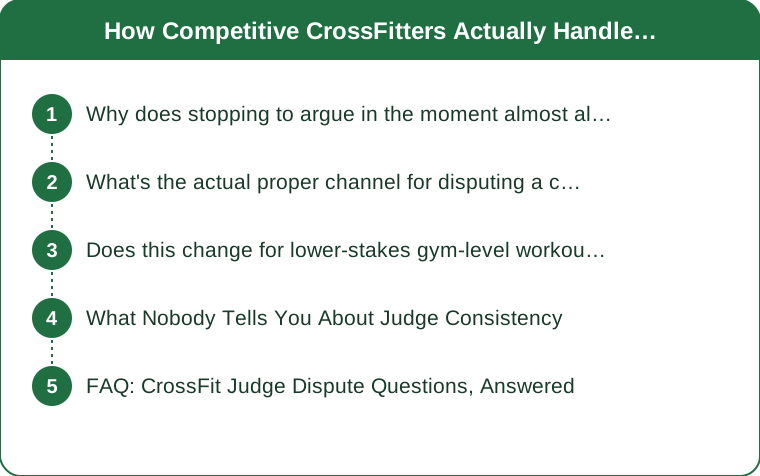
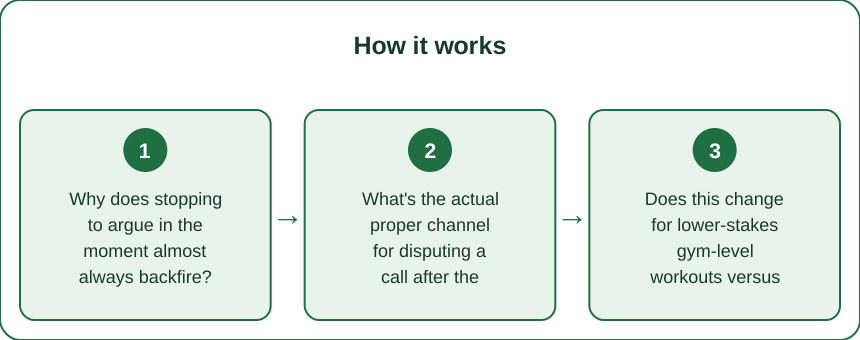
Why does stopping to argue in the moment almost always backfire?
Because a paused clock doesn’t stop the workout’s time cost, and most competition formats don’t allow real-time call reversal anyway — the practical result of stopping to argue is lost time and disrupted rhythm, with essentially no chance the call changes in the moment regardless of how justified the disagreement is.
What’s the actual proper channel for disputing a call after the fact?
Most competitions have a formal process — flagging a floor manager, submitting a written appeal, or a designated review window — and using that process calmly after finishing the workout is both more likely to result in an actual review and doesn’t cost competition time the way an in-workout argument does.

Does this change for lower-stakes gym-level workouts versus formal competition?
Somewhat — in a regular gym class setting, a brief, respectful clarifying question to the judge mid-set is generally fine and low-stakes, since there’s no formal scoring on the line; the finish-first-then-appeal approach matters most specifically in scored competition settings where time and official standing are actually affected.
What Nobody Tells You About Judge Consistency
A single judge’s rep standard can vary slightly rep to rep even with good intentions, since judging fast-moving, high-fatigue movements accurately is genuinely difficult — experienced competitors account for this by training with a slightly stricter self-standard than the minimum they expect a judge to enforce, which reduces the frequency of disputed calls in the first place.
FAQ: CrossFit Judge Dispute Questions, Answered
Is it ever appropriate to visibly react to a disagreed-with call during a workout?
A brief, non-disruptive acknowledgment is generally accepted, but continuing to argue or visibly protest while the clock runs is broadly considered poor competition etiquette regardless of whether the call was ultimately overturned.
Do formal appeals actually get calls overturned often?
It varies by event and situation, but a calm, timely, properly channeled appeal has a meaningfully better track record of being taken seriously than an in-the-moment dispute.
How should an athlete handle disagreeing with a no-rep call on a movement they need to redo?
Redo the rep as called and keep moving — the time cost of continuing to argue almost always outweighs the time cost of simply completing the extra rep and settling the disagreement afterward.
TL;DR:
- Finishing the movement or workout first, then disputing through proper channels, protects both time and standing
- Most formal competitions have a specific review process worth using instead of an in-workout argument
- Gym-level informal settings allow more real-time clarifying questions than scored competition does
- Judge standards can vary slightly rep to rep, which is part of why experienced athletes self-train to a stricter standard
Keep moving, then appeal properly — arguing mid-workout costs more than almost any call is worth contesting in the moment.
Keep Reading
This article is for general informational and styling purposes only. Fit, sizing, and product availability may vary.