The Shoulder Care Routine Every Kipping Pull-Up Athlete Skips (Until It's a Problem)
Quick Answer: Kipping pull-ups load the shoulder through a wider, faster range of motion with momentum than strict pull-ups, which increases stress on the rotator cuff and shoulder capsule, so a specific warmup (band shoulder work and scapular activation) before high-volume kipping WODs, plus periodic strict pull-up work to build baseline shoulder strength, meaningfully reduces injury risk.
Kipping pull-ups let you do more reps with less pure strength, which is exactly why they’re popular in WOD programming — and exactly why the shoulder takes on a kind of repetitive, momentum-driven stress that strict pull-ups don’t create in the same way.

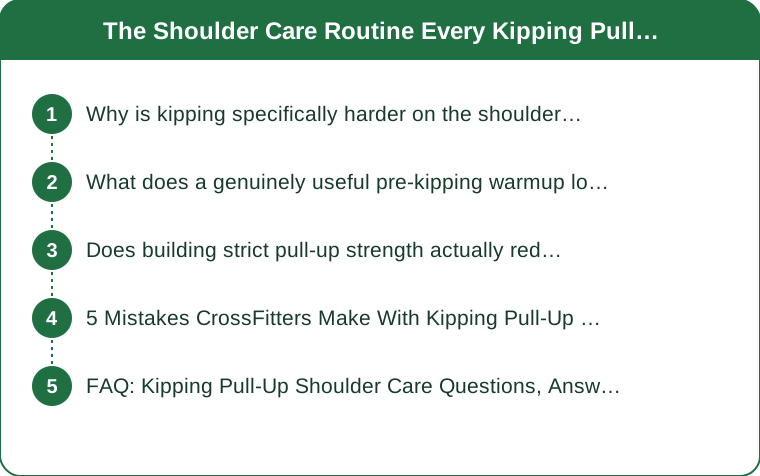
Why is kipping specifically harder on the shoulder than strict pull-ups?
The kip generates momentum through a hip drive that translates into a faster, wider arc of shoulder motion, especially at the bottom of the rep where the shoulder moves through significant range under load and speed simultaneously — strict pull-ups, by contrast, move slower and through a more controlled range, putting less combined speed-and-range stress on the joint capsule and rotator cuff per rep.
What does a genuinely useful pre-kipping warmup look like?
Band pull-aparts, external rotation work, and scapular pull-ups (a controlled shoulder-blade-only movement on the bar) done specifically before a high-volume kipping WOD activate the rotator cuff and scapular stabilizers that need to be firing correctly to handle the kip’s momentum safely — a general warmup (some rowing, some air squats) doesn’t specifically prepare this joint pattern the way targeted shoulder work does.

Does building strict pull-up strength actually reduce kipping injury risk?
Yes, meaningfully — strict pull-up strength represents genuine baseline shoulder and lat strength, and athletes who can do kipping pull-ups but have very little strict strength are often relying heavily on momentum to compensate for a lack of underlying strength, which increases the load the passive structures of the shoulder (ligaments, joint capsule) have to absorb instead of the muscles doing the work.
5 Mistakes CrossFitters Make With Kipping Pull-Up Volume
- Doing zero shoulder-specific warmup before a high-rep kipping WOD. 2) Chasing kipping volume before building meaningful strict pull-up strength as a base. 3) Ignoring early shoulder fatigue or clicking sensations mid-WOD instead of scaling down. 4) Never varying grip width or hand position, which concentrates stress on the same shoulder structures every single session. 5) Skipping any dedicated shoulder mobility or rotator cuff strengthening work outside of WOD time, treating the WODs themselves as sufficient shoulder training.
FAQ: Kipping Pull-Up Shoulder Care Questions, Answered
Is it ever okay to scale down mid-WOD if my shoulder starts feeling off?
Yes, and it’s the right call every time — scaling to a band-assisted or ring row variation mid-workout because of shoulder fatigue or discomfort is a smart training decision, not a failure to complete the workout as written.
How often should dedicated shoulder mobility work happen outside of class?
Two to three short sessions a week (10-15 minutes of band work and rotator cuff strengthening) is a reasonable target for athletes doing regular kipping volume, separate from class warmups.
Does butterfly-style kipping (used in competitive CrossFit) add more shoulder risk than standard kipping?
Generally yes — butterfly kipping’s faster cycle rate increases the speed and frequency of shoulder loading, which is part of why it’s typically introduced only after an athlete has built solid strict strength and standard kipping competency first.
TL;DR:
- Kipping’s momentum-driven motion loads the shoulder through more speed and range than strict pull-ups
- Targeted band and scapular warmup before kipping WODs meaningfully reduces injury risk
- Building real strict pull-up strength reduces reliance on momentum to compensate for weak shoulders
- Early shoulder fatigue or clicking during a WOD is a scale-down signal, not something to push through The athletes who kip for years without shoulder problems usually aren’t just lucky — they’re the ones who treated shoulder prep as part of the workout, not an optional extra.
Keep Reading
This article is for general informational and styling purposes only. Fit, sizing, and product availability may vary.