Why Going Out Too Fast in the First Round Sabotages the Whole WOD
The first round of a timed WOD often gets attacked at close to max effort, chasing an early lead on the clock. But that early sprint accumulates metabolic fatigue faster than the body can clear it, and the resulting slowdown in later rounds typically costs more total time than a slightly more conservative, even pace would have.

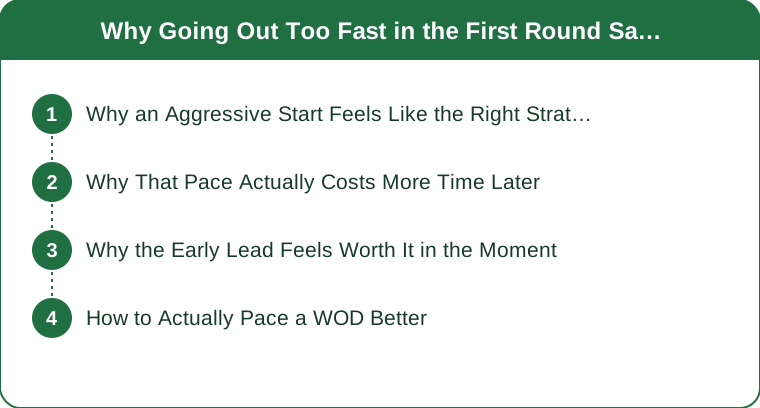
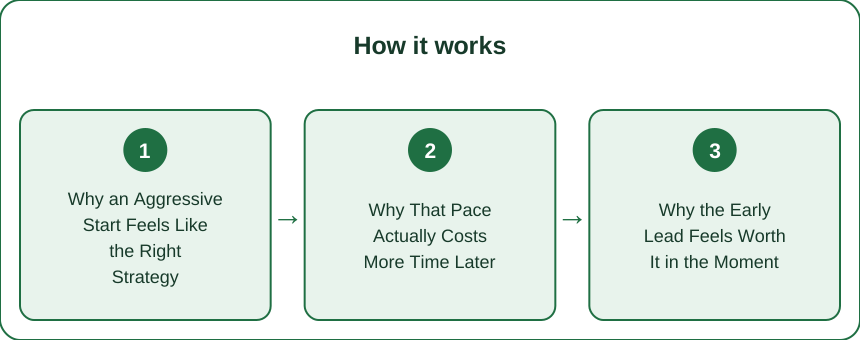
Why an Aggressive Start Feels Like the Right Strategy
The competitive instinct: a fast first round producing an immediately visible lead over training partners or a past best time, which feels motivating and makes an all-out start seem like the obvious way to bank time early.
Why That Pace Actually Costs More Time Later
The fatigue math: an unsustainably fast early pace building up metabolic byproducts and muscular fatigue faster than the body can clear them during the work, and once that threshold is crossed, later rounds slow disproportionately, often losing far more time in rounds four through six than was ever gained in round one.

Why the Early Lead Feels Worth It in the Moment
The overlap: the fast start and the later crash happening in the same workout but at very different points, which makes it hard to connect the two in the moment, the early speed feels like pure gain, and the late slowdown gets chalked up to just being tired rather than a direct consequence of the pace chosen minutes earlier.
How to Actually Pace a WOD Better
The practical strategy: starting the first round at a controlled, sustainable effort, roughly eighty to eighty-five percent of an all-out pace, and saving the true sprint for the final round once the finish line is in sight, and the frame (an all-out first round accumulates fatigue faster than it can clear, costing more time later than it saves early — even pacing across rounds is what actually produces a faster total time.)
The first round of a timed WOD often gets attacked at close to max effort, chasing an early lead on the clock. But an unsustainably fast early pace builds up metabolic fatigue faster than the body can clear it, and once that threshold is crossed, later rounds slow disproportionately, often losing far more time than was ever gained in round one. The fast start and the later crash happen in the same workout but at very different points, which makes it hard to connect the two, the speed feels like pure gain and the slowdown gets chalked up to just being tired. Starting at a controlled eighty to eighty-five percent effort and saving the true sprint for the final round is what actually produces a faster total time.
Keep Reading
This article is for general informational and styling purposes only. Fit, sizing, and product availability may vary.