Back at the Box After Two Weeks Off? Scale Like This, Not Like That
Quick Answer: After two weeks off, scale volume and skill complexity first, load second. Strength holds up well over a two-week layoff, but grip endurance, gymnastics capacity, and metabolic conditioning drop noticeably, and your hands have lost the calluses that let you survive high-rep pull-up work. Take about 70 percent of the prescribed reps for the first two sessions, cap any single set of gymnastics work at half your previous max, and keep loads at roughly 80 percent of your pre-break working weights.
The first WOD back always goes one of two ways: a smart session that feels a bit easy, or a hero session followed by three days of not being able to lift your arms.

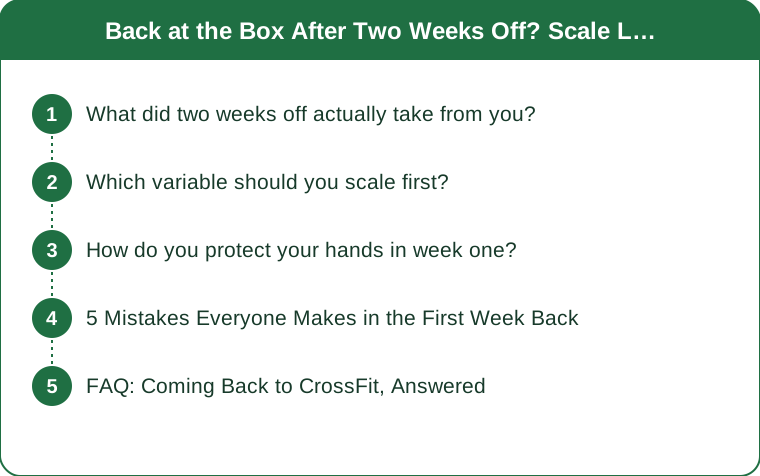
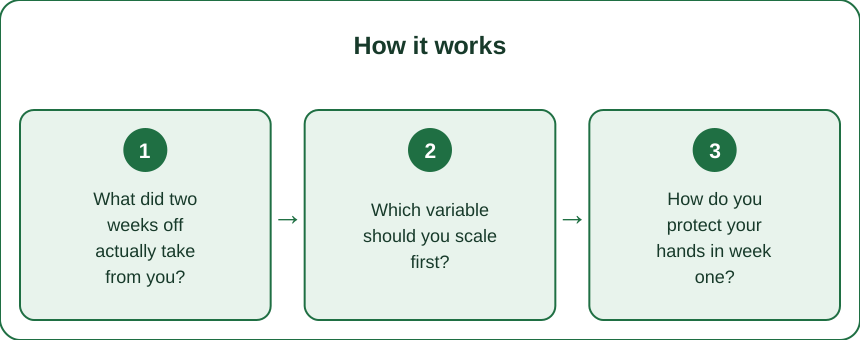
What did two weeks off actually take from you?
Very little maximal strength. Two weeks is generally too short for meaningful strength detraining in a trained athlete, and many people come back and hit similar numbers on a heavy single.
What drops much faster:
Work capacity and lactate tolerance. Your ability to keep moving at high intensity fades quickly. Expect your metcon times to be noticeably slower even when the movements feel fine.
Grip endurance and hand condition. This is the one people underestimate every time. Calluses soften over two weeks, and the first high-volume pull-up or toes-to-bar workout tears hands that were completely fine three weeks ago.
Gymnastics rhythm. Kipping is a timing skill. It degrades faster than strength does, and it degrades in a way that feels fine for the first five reps and terrible at rep fifteen.
Positional tolerance. Front rack, overhead squat, and deep hip positions all get stiffer, particularly if the two weeks involved a lot of sitting or travel.
So the athlete you are on day one is nearly as strong, meaningfully less conditioned, and distinctly less skilled.
Which variable should you scale first?
The scaling order that keeps people healthy is volume, then complexity, then load — which is roughly the opposite of what most people do.
Volume first. Take about 70 percent of prescribed reps for the first two sessions. If the workout calls for 100 wall balls, do 70. This is the single most protective adjustment and it is the one people skip because it feels like admitting something.
Complexity second. Swap high-skill movements for their simpler cousins in the first week. Ring muscle-ups become pull-ups. Butterfly becomes strict or a slow kip. Snatches become power snatches from the hang. The pattern needs re-teaching under low fatigue, and a metcon is the worst place to re-teach anything.
Load last. Use around 80 percent of your pre-break working weights. Since strength did not really go anywhere, this is not about capability — it is about giving connective tissue a week to catch up with muscle.
The common mistake is scaling load down to feel responsible while keeping full reps and full skill complexity. That combination produces exactly the torn hands and tweaked shoulders you were trying to avoid.

How do you protect your hands in week one?
This deserves its own plan, because ripped hands are the most common and most avoidable comeback injury and they cost you a week of training.
Cap total pull-up-style reps at roughly half your usual for the first two sessions, regardless of how easy they feel. Hands fail suddenly, not gradually.
Break sets small from the first rep. If you normally do sets of 15, do sets of 5. Small sets with short rests preserve skin far better than large sets to failure, and the workout time is barely different.
File your calluses before you come back, not after. Thick raised calluses are what catches and tears. A quick pass with a callus shaver or file in the days before your first session removes the ridge that peels.
Use grips. Gymnastics grips are not a crutch during a comeback week, they are the correct tool. Chalk lightly too — heavy chalk increases friction and friction is what tears skin.
And if a hand starts to feel hot or pinched, stop that movement immediately and substitute. A hot spot is a tear that has not happened yet, and you have about thirty seconds to decide.
5 Mistakes Everyone Makes in the First Week Back
1. Testing a benchmark on day one. Fran, Murph, or a heavy single on the first session back tells you nothing useful and costs a week. Retest at the end of week two instead.
2. Chasing the leaderboard time from before the break. Your conditioning is genuinely down. Racing a number you set at peak fitness with two weeks of detraining is how people redline into terrible movement quality.
3. Skipping the extra warm-up. Positions are stiffer after time off, especially front rack and overhead. Add five minutes of specific mobility before the first barbell touches your shoulders.
4. Doing every class in week one. Come back at three sessions in the first week, not five or six. The soreness from the first two sessions is real and compounds fast.
5. Being embarrassed about scaling. Nobody in the gym is tracking your scaling choices, and the coach is quietly relieved. The person doing 70 reps in week one is the person doing 100 in week three; the alternative is being the person doing zero in week two.
FAQ: Coming Back to CrossFit, Answered
How long until I feel normal again?
Most people feel roughly like themselves by the end of the second week and fully back within three. Conditioning returns faster than it built the first time — that is a real physiological effect, not encouragement.
Should I do extra accessory work to catch up?
No. Extra volume in a comeback week is precisely backwards. Add accessory work back in week two once you know how your body is responding.
What if the two weeks off was because of an injury or illness?
Different situation, and the guidance above does not apply cleanly. Return under whatever guidance you were given, keep intensity genuinely low, and expect a longer ramp. This is general information, not medical advice.
Is soreness in week one normal?
Yes, and it will be more than you expect from the amount of work done — that is a well-documented effect of returning after a layoff. What is not normal is sharp joint pain, one-sided pain, or soreness that keeps getting worse past 72 hours.
Should I tell the coach I have been away?
Yes, before class. It takes ten seconds and it means the scaling conversation happens before the clock starts rather than during it.
TL;DR:
- Two weeks off costs you conditioning, grip, and skill timing — not much actual strength.
- Scale in this order: volume first (70 percent of reps), complexity second, load last (80 percent).
- Cap gymnastics volume at half your usual, break sets small from rep one, and file calluses before you return.
- Take three sessions in the first week, not five, and add five extra minutes of position-specific warm-up.
- No benchmarks and no leaderboard chasing until the end of week two.
The comeback week is the cheapest week in your training year to get right. Give up a little ego for five days and you get the whole month back — which is a much better trade than the one most people make on day one.
Keep Reading
This article is for general informational and styling purposes only. Fit, sizing, and product availability may vary.