Why Barbell Cycling Fails Before Your Engine Does
Quick Answer: In most barbell-heavy workouts, the limiter is local muscular endurance - grip, forearms, upper back - rather than cardiovascular capacity. Sustained gripping restricts blood flow to the working forearm muscles, so metabolites accumulate and the hand simply stops closing. Because that failure is local, resting until your breathing recovers does not fix it. Break the set before failure, use hook grip and a relaxed hand, drop the bar deliberately, and train grip endurance separately.
Your breathing is fine. Your legs are fine.
And your hands have quietly resigned from the workout without consulting you.

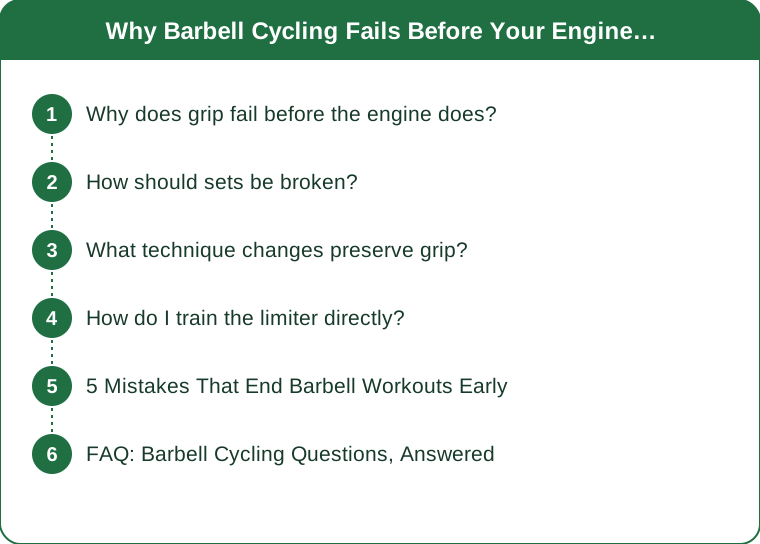
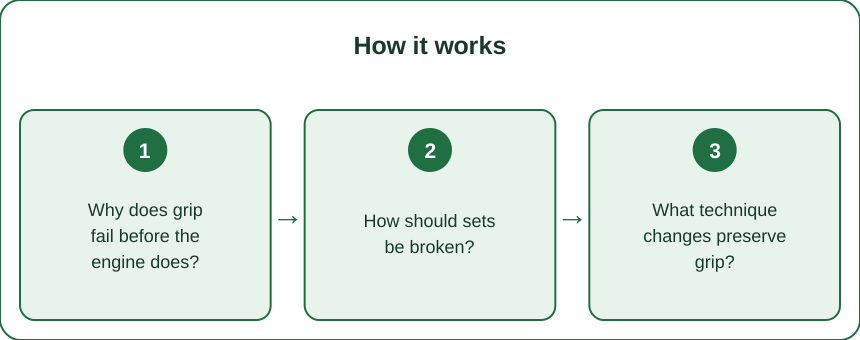
Why does grip fail before the engine does?
Sustained gripping restricts blood flow within the forearm, because contracted muscle compresses its own vessels.
That means metabolites accumulate faster than they can clear, which is a local problem regardless of how well your heart and lungs are performing.
Forearm muscles are small with limited local endurance capacity compared to the large muscle groups doing the actual lifting.
Recovery from local fatigue is slower than recovery from breathing hard, which is why standing over the bar for 20 seconds fixes your breathing and not your hands.
Upper back endurance fails similarly, particularly in high-rep deadlifts and cleans where posture degrades before anything else.
Which means the workout ends for reasons that have nothing to do with the score you thought you were chasing.
How should sets be broken?
Break before failure, not at it, since a set taken to grip failure costs disproportionately more recovery than one stopped two reps early.
Planned breaks beat reactive ones. Deciding on 5-5-5 before you start produces a faster set than 11 reps followed by a long recovery.
Bigger sets early are usually a trap in longer workouts, because they mortgage the later rounds against a small early gain.
Micro-rests of three to five seconds with the hands open are often enough to restore a meaningful amount of grip.
Drop the bar deliberately rather than fighting a rep you can feel slipping, since a failed rep costs far more than a planned drop.
And keep breaks short and consistent - five seconds every set beats twenty seconds every third set for total time.
What technique changes preserve grip?
Hook grip is the single biggest change for cycling barbells, since it uses the thumb and skeletal structure rather than sustained finger flexion.
Relax the hand at the top of the movement, letting the bar sit in the fingers rather than squeezing it in the palm.
Open the hand briefly at any pause - overhead, at the hip, at the top of a deadlift - which restores flow for a moment.
Chalk properly. Sliding grip forces a harder squeeze, and that costs endurance directly.
Do not over-grip on the way down, which is where a great deal of unnecessary forearm work happens.
And keep the bar close. A bar drifting away increases the leverage the grip has to resist, which multiplies the cost of every rep.

How do I train the limiter directly?
Dead hangs, accumulating two to three minutes across sets, twice a week - simple and effective.
Farmer carries, heavy, 30 to 60 seconds per set, which trains grip endurance under a similar sustained demand.
Touch-and-go sets at moderate weight for higher reps in training, which builds the specific tolerance that workouts demand.
Upper back endurance work - barbell rows, chest-supported rows, sustained holds - since posture failure and grip failure usually travel together.
Do grip work after your main lifts, not before, so it does not compromise the session.
And progress gradually. Forearm and elbow tendons respond slowly to new loading, and this is a common source of elbow irritation when people add grip work all at once.
This is general information, not medical advice.
5 Mistakes That End Barbell Workouts Early
1. Going unbroken on the first round. The 21 unbroken at the start feels great and produces a grip deficit you spend the next four rounds paying off. In longer workouts, the fastest total time almost always comes from consistent broken sets from round one.
2. Not using hook grip. It is uncomfortable for the first two weeks and then it is dramatically more efficient for cycling. Almost every athlete who switches wonders why they waited.
3. Squeezing the bar in the palm. The bar should sit in the fingers with the hand relatively relaxed at the top. A hard palm squeeze on every rep is a large amount of unnecessary forearm work, and it also tears hands faster.
4. Waiting until the breathing recovers before picking the bar up. Breathing recovers in seconds; local forearm fatigue does not. Standing there waiting to feel ready wastes time without restoring grip, which is why a planned short break beats an open-ended one.
5. Fighting a rep you can feel slipping. A failed rep costs recovery, form and often skin. Dropping deliberately and taking three seconds is faster in the end, every time.
And the bonus: never training grip. It is the limiter in a large share of workouts and almost nobody trains it directly. Five minutes twice a week changes what the last round looks like.
FAQ: Barbell Cycling Questions, Answered
Should I use straps in a workout?
In training for pulling volume, straps are useful. In workouts where grip is a deliberate part of the test, they change what the session is - and many competitions restrict them.
Is hook grip bad for the thumb?
It is uncomfortable initially and adapts within a few weeks. Tape helps during the adjustment. Persistent thumb pain beyond that is worth checking.
How do I stop tearing my hands?
Maintain calluses by filing them down, use chalk sparingly, and avoid over-gripping. Grips or gymnastics tape help on high-volume bar work.
Why do my forearms pump up so fast?
Restricted blood flow in sustained gripping causes metabolite accumulation. Relaxing the hand at every opportunity and breaking sets earlier both reduce it.
Does grip strength or grip endurance matter more?
Endurance, for most workouts. Maximal grip strength matters less than the ability to sustain a moderate grip over minutes.
How long before grip training shows up in workouts?
Usually a few weeks of consistent work. Progress gradually - tendons in the forearm and elbow adapt more slowly than muscle.
This is general information, not medical advice.
TL;DR:
- The limiter in barbell workouts is usually local forearm and upper back endurance, not cardiovascular capacity.
- Gripping restricts blood flow to the forearm, so local fatigue recovers far slower than breathing does.
- Break sets before failure with planned, short, consistent rests - not reactive long ones.
- Hook grip, a relaxed hand at the top, good chalk and a close bar path all preserve grip.
- Train it directly: dead hangs and farmer carries twice a week, progressed gradually.
You did not run out of engine. You ran out of hands.
Keep Reading
This article is for general informational and styling purposes only. Fit, sizing, and product availability may vary.